
![60+ Resume Statistics & Trends Job Seekers Must Know [2026]](https://jobera.com/resources/wp-content/uploads/2024/01/resume-stats.png)
Your resume is not lending you an interview?
You are not the only one!
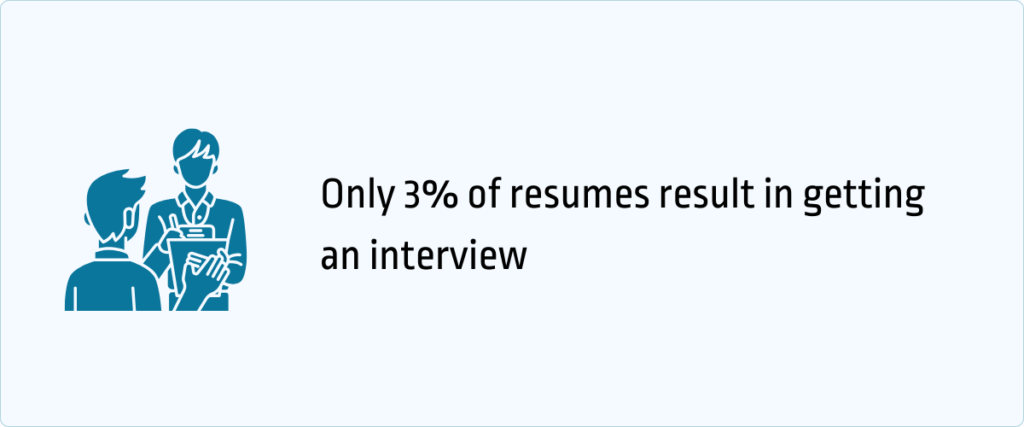
Statistics suggest that only 3% of resumes result in getting an interview.
Shocking, right?!
75% of job seekers never hear back from employers after applying for a job.
1 out of 5 recruiters will reject a candidate in under 60 seconds without finishing reading their resume.
84% of recruiters may reject a resume written in an informal tone.
Is your resume up to the challenge? Let’s find out!
Top Resume Statistics: Editor’s Pick
- 83% of recruiters reported that they are more likely to hire a candidate who has a well-formatted resume. [3]
- 63% of hiring managers said that they prefer resumes that are one page long. [4]
- 75% of job seekers never hear back from employers after applying for a job. [6]
- Nearly 80% of recruiters admitted that they reject resumes with typos or grammar mistakes. [8]
- 1 out of 5 recruiters will reject a candidate in under 60 seconds without finishing reading their resume. [7]
- 72% of people admitted to lying in resumes. [8]
- 84% of recruiters may reject a resume written in an informal tone. [9]
- Over 77% of recruiters use LinkedIn to hire. [10]
- 91% of recruiters prefer resumes with soft skills. [11]
Resume Format Statistics
How important is a formatted resume?
63% of hiring managers said that they prefer resumes that are one page long. [4]
77% of employers agreed that more experienced candidates should have a two-page resume. [4]
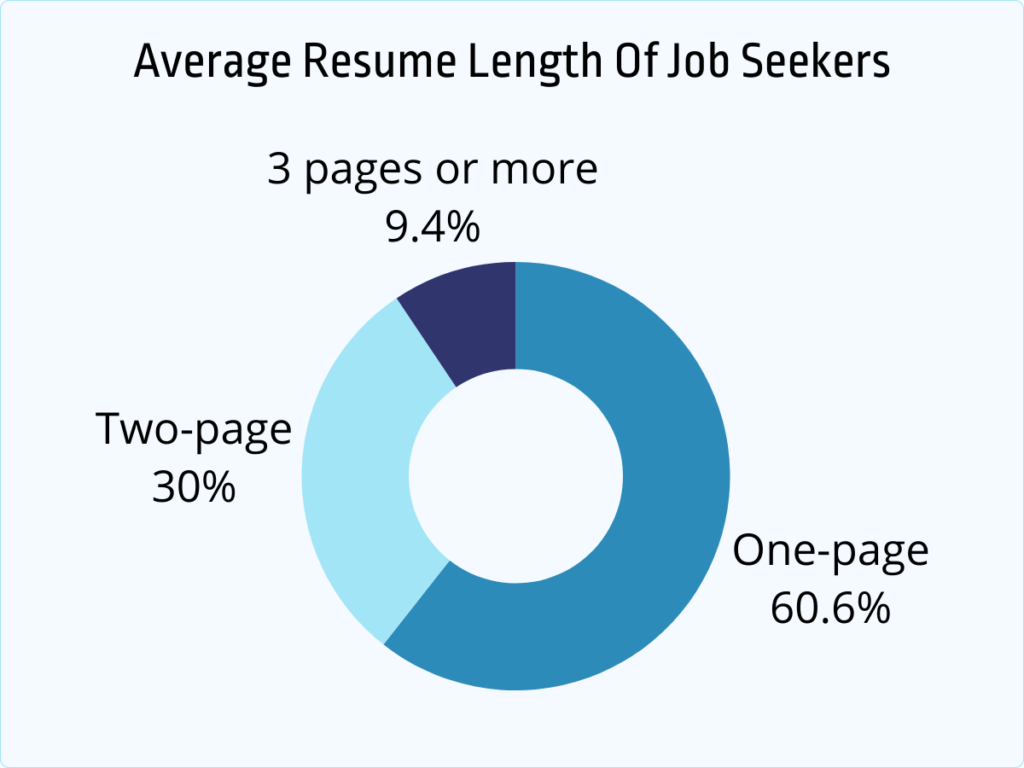
According to Novoresume’s Job-Seekers survey, 60.6% of job-seekers have a one-page resume. [5]
Two-page resumes are common for 30% of candidates.
Meanwhile, about 9.4% of people have a resume that’s 3 pages or more. [5]
Resume Rejection Statistics
75% of job seekers never hear back from employers after applying for a job. [6]
1 out of 5 recruiters will reject a candidate in under 60 seconds without finishing reading their resume. [7]
25% of recruiters spend less than 30 seconds reading an applicant’s resume. [7]
Over 10% of job seekers have applied to 50+ jobs without hearing back. [8]
Nearly 80% of recruiters admitted that they reject resumes with typos or grammar mistakes. [8]
Complicated designs and layouts like clashing fonts, lack of white space, cluttered images, or even emojis, are a big no for more than 40% of recruiters. [8]
84% of recruiters may reject a resume written in an informal tone. [9]
72% of people admitted to lying in resumes. [8]
75% of hiring managers have caught a lie on a resume and rejected the candidate. [8]
Resume Statistics For Recent Graduates
Is your GPA going to make a difference in your resume?
Times are changing. Maybe not!
In 2019, about 75% of employers intended to screen candidates based on their GPA, only 37% look at GPAs now. [15]
Problem-solving skills are a high priority for 86% of employers hiring recent graduates. [16]
Internship experience in a relevant field is always a plus. [16]
Resume Skills Statistics
Let’s explore the resume skill section statistics.
- 41% of recruiters first look for skills on a resume. [10]
- It is interesting to note that the latest job descriptions tend to list over 20 required skills on average but most resumes only include 13. [10]
- Now skills are more important than ever as there is a 20% increase in job postings that focus more on skills and responsibilities rather than qualifications. [10]
- 91% of recruiters prefer resumes with soft skills. [11]
- Microsoft Office and Project Management are the most popular hard skills listed on resumes. [11]
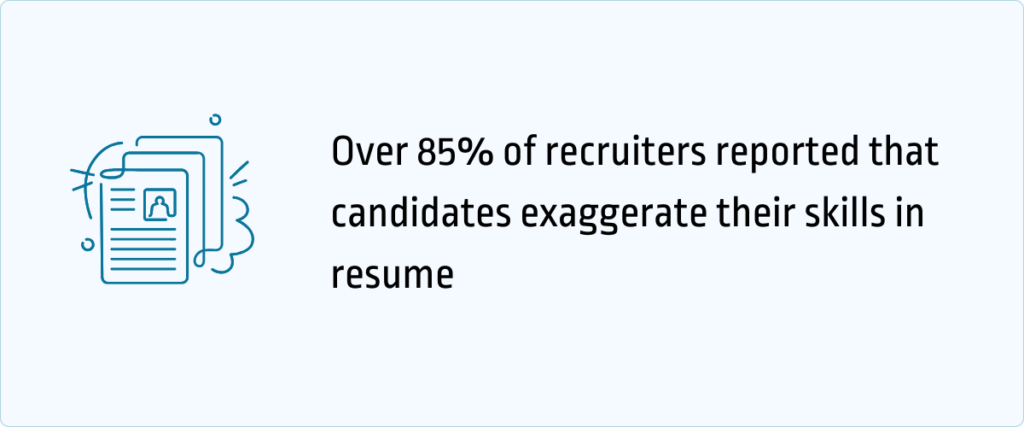
- Over 85% of recruiters reported that candidates exaggerate the skills on their resume. [11]
Resume Social Media Statistics
Can social media affect your resume?
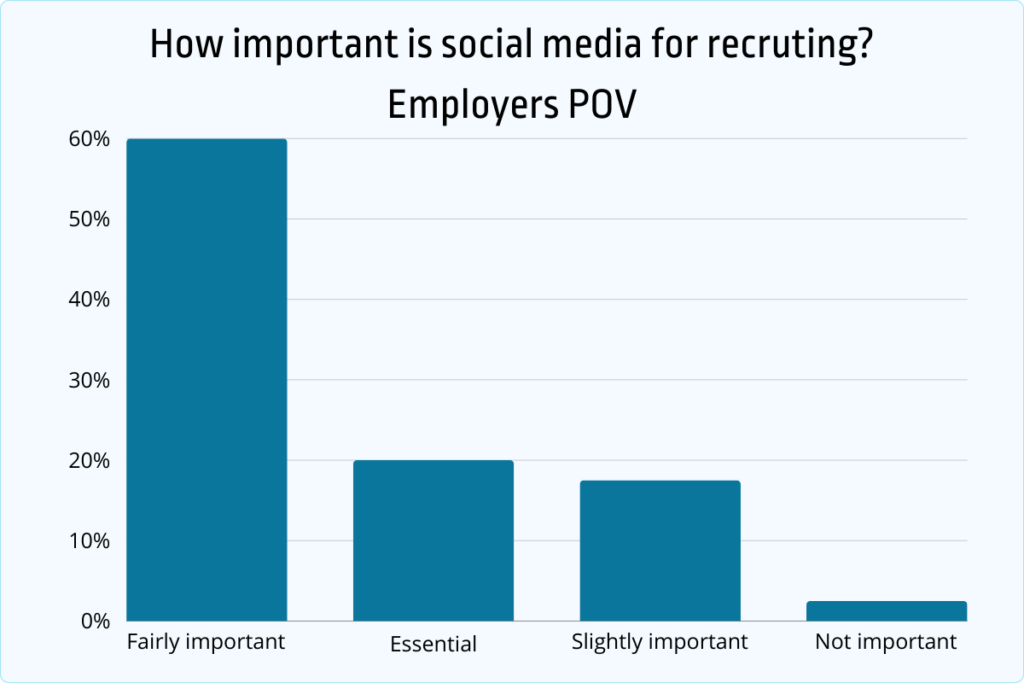
Absolutely Yes! Today social media has become an important part of our social as well as professional lives.
90% of employers confirmed using some form of social media to look for a job vacancy. [17]
Over 77% of recruiters use LinkedIn to hire. [12]
64% of recruiters use Facebook and only 3% use Twitter to seek out potential candidates. [17]
Over 75.6% of job seekers ’ first choice to look for a job is LinkedIn. [12]
Over 52 million people use LinkedIn to search for jobs. [12]
About less than 50% of resumes include a link to the candidate’s LinkedIn profile. [12]
Cover Letter And Resume Statistics
Did you attach a cover letter with your last resume or did you miss it like 31.1% of job-seekers do?!
- According to the Job-Seekers survey, more than 47.4% of applicants don’t include a cover letter with their application unless the employer specifically mentions attaching one. [20]
- About 45% of recruiters confirmed that not having a cover letter could get candidates rejected. [20]
- 26% of recruiters confirmed that cover letters are a considerable factor while making a hiring decision. [21]
- 30.5% of job-seekers admitted to submitting the same cover letters everywhere. [21]
- While 34.1% prefer to tailor a completely new letter to each of their applications. [21]
- 35.4% of job seekers who send cover letters make edits and adjustments to the same cover letters. [21]
- The recommended average length of the cover letter is half a page. [21]
What To Include In Resume? Do’s And Don’t’s Of Resume
Writing a resume but not getting desired results?
Here we have listed common resume mistakes you might be committing.
- Spelling errors and typos.
- No customization.
- Too lengthy.
- Do not attach a cover letter.
- No precise format, spacing, and document type.
Let’s go through quick tips to ace your next interview.
- Appropriate use of numbers, percentages, data, and metrics can give you an edge.
- Add relevant examples and results you derived from your experience.
- Mention your education and relevant qualifications as 63% prefer it. [13]
- Add a personalized cover letter.
- 63% of recruiters reported that the biggest mistake job seekers make on their resumes is not tailoring their resume to the job requirements. [14]
- Keep it concise and honest.
Latest Resume Trends And Predictions
- Only 3% of resumes result in getting an interview. [1]
- 63% of recruiters prefer to get personalized resumes according to the job position. [2]
- Job seekers with AI-assisted resumes have an 8% higher likelihood of getting hired. [18]
- It is interesting to note that AI-generated applications in resume writing led to 7.8% more job offers and 8.4% higher wages for job seekers. [18]
- According to the NACE survey, the skillset is preferred over GPA by recruiters. [19]
If you found this article interesting, you might enjoy these too:
[related_posts_by_tax taxonomies=”category,post_tag” posts_per_page=”5″ orderby=”post_modified” title=””]
FAQs
Are the resume and CV the same?
No, a resume is not the same as a CV. A resume is a short document that covers the relevant skills, qualifications, and abilities of candidates in brief.
While a CV only contains detailed explanations of candidates’ backgrounds and experience.
What are important sections of a resume?
Every section of the resume is important. The resume should include contact information, work experience, educational background, skills, and a resume summary or objective.
What are common resume mistakes?
These are common resume mistakes you might be committing.
- Spelling errors and typos.
- No customization.
- Too lengthy.
- Do not attach a cover letter.
- No precise format, spacing, and document type.
The Final Thoughts
A well-written and formatted resume can get you an interview as 83% of recruiters reported that they are more likely to hire a candidate who has a well-formatted resume.
73% of hiring managers reported that they are more likely to interview a candidate with a visually appealing resume and job seekers with AI-assisted resumes have an 8% higher likelihood of getting hired.
Sources
- Forbes. The Virtual Interview Is The New Resume: What You Need To Know
- Glassdoor. How to Customize Your Resume for Each Job You Apply to
- Jobvite. 2022 Job Seeker Nation Report
- Indeed. Resume cover letter statistics
- Novoresume. 99+ Must-Know Resume Statistics To Get You Hired in 2024
- Indeed. FAQ: Do Employers Care About GPA?
- The Undercover Recruiter. Top Resume Mistakes That Could Cost You the Job
- The Motley Fool. Does It Pay to Use a Resume Service? New Data Says Yes
- Business Insider. 20 words you should never put on your resume
- LinkedIn. A Skills-First Blueprint to Better Job Outcomes
- HRDive. 85% of recruiters say candidates exaggerate skills
- Business Insider. The best job candidates don’t crunch their résumé onto one page, they follow these tips instead.
- CareerBuilder. Resume: What why and How
- Forbes. Why Your Job Search Isn’t Yielding Results
- Qureos. 30+ Resume Statistics for Jobseekers
- NACE. 2023 Job Outlook Report
- Agency Central. Social Recruiting: Survey, Statistics and Infographics
- Resume Genius. 1 in 4 Workers Prefer Interacting with AI Instead of Humans
- NACE. The Ever-Flutuating Skill Set
- Glassdoor. Hiring and Workplace Trends Report 2023
- Forbes. Write A Cover Letter To Get Noticed
